Is Short-Form Video Really Rotting Our Brains? Or Is Our Brain Just Snacking Too Much?
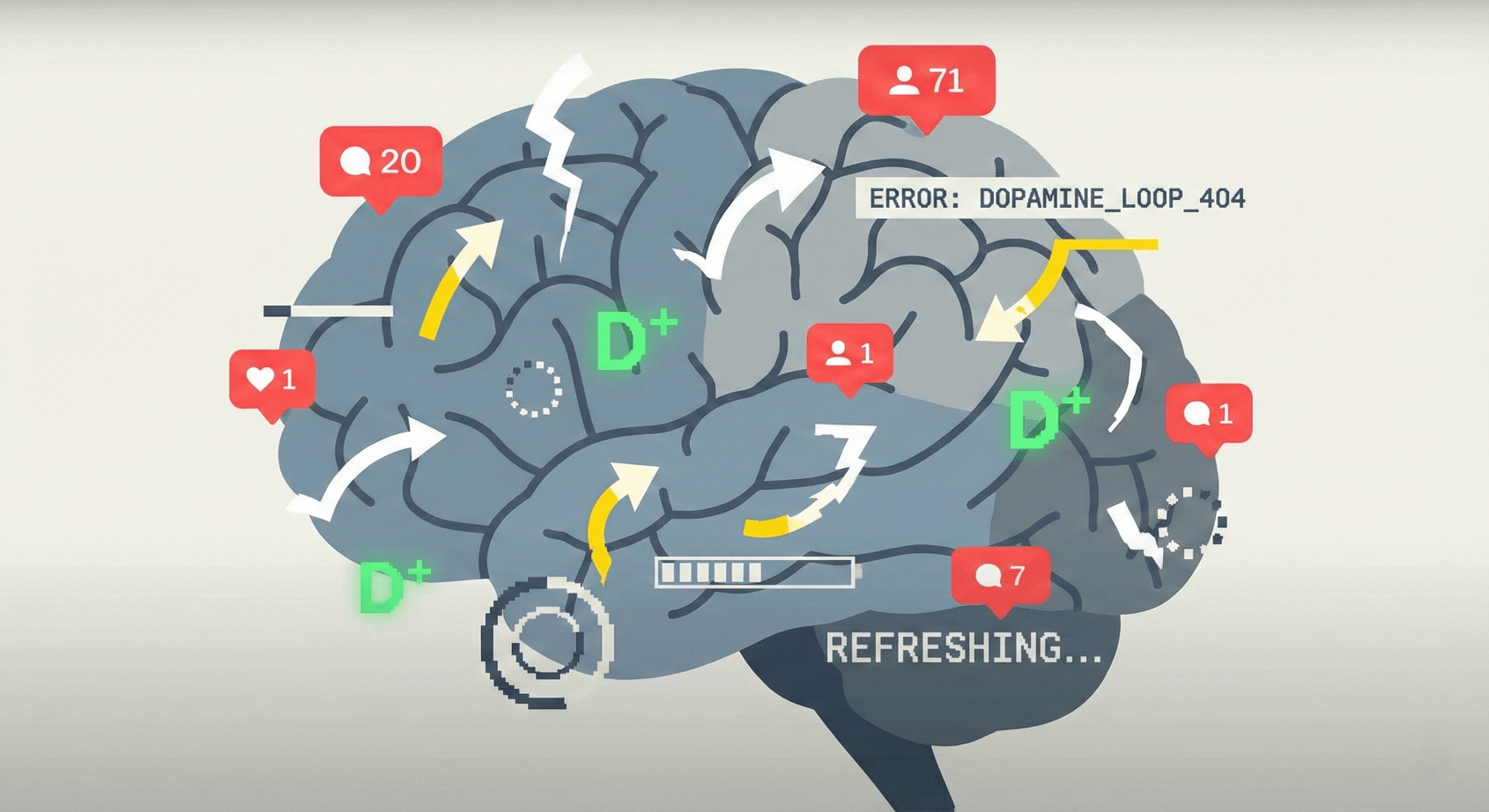
Let’s start with a confession.
Most of us have had this moment: you open TikTok “for five minutes,” blink, and suddenly it’s an hour later, your thumb hurts, your brain feels foggy, and you can no longer remember why you picked up your phone in the first place. You haven’t learned anything specific, but you also haven’t done nothing. You’ve just… consumed.
People have a name for this now: brain rot.
It’s a wonderfully dramatic phrase, conjuring images of neurons melting like overcooked pasta. But drama aside, the question is real: is short‑form video actually harming our brains—or is this just another moral panic in a long line of them?
Every Generation Thinks the Next One Is Doomed
History is very clear on one thing: humans are extremely suspicious of new media.
Socrates worried that writing would weaken memory because people wouldn’t need to remember things anymore. Victorians believed novels were dangerously addictive. Radio was supposed to destroy conversation. Television would rot your brain. Video games would turn children violent. Smartphones would end deep thinking forever.
And yet, here we are. Still thinking. Still reading. Still arguing online.
So when people confidently declare that TikTok is “making us stupid,” it’s reasonable to roll your eyes a little. Skepticism is healthy. But skepticism doesn’t mean we stop asking questions. It means we ask better ones.
Instead of “Is TikTok evil?”, the more useful question is:
What is different about this medium—and what does that difference do to the mind?
A Rare Experiment on “Brain Rot”
In 2022, researchers in Munich ran one of the few experiments that directly tested this idea.
They gave 60 people a cognitive test. Then they sent them away for a ten-minute break. But here’s the twist: everyone spent that break differently.
After the break, everyone took the test again.
If short-form video really does something unique to the brain, this is where it should show up.
And interestingly, it did.
But to understand why, we need to talk about what makes TikTok fundamentally different from every other form of media we’ve had before.
The Algorithm Isn’t the Real Story (The Interface Is)
We talk a lot about “the algorithm.” It’s usually described like some shadowy, all-knowing brain puppet master deciding what we see.
But buried inside leaked TikTok documents was a far more revealing sentence:
“TikTok’s success can largely be attributed to strong out-of-the-box personalization and automation, which limits user agency.”
That last part matters more than it sounds.
Limits user agency.
This isn’t just about what content you see. It’s about how much choice you experience while consuming it.
The Restaurant With No Menu
Imagine a normal restaurant.
You sit down. You browse a menu. You choose. You eat. That’s how TV and traditional YouTube work. Even when recommendations are personalized, you still feel like you’re choosing.
Now imagine a very different restaurant.
There’s no menu.
You sit down, open your mouth, and a device places a small bite of food directly onto your tongue. You don’t choose what it is. You don’t even know what’s coming next. If you like it, you swallow. If you don’t, you spit it out. Either way, another bite immediately follows.
The restaurant watches how long you chew. It notices which flavors you swallow fastest. It adjusts future bites accordingly. Occasionally, it throws in something unexpected—because hey, it’s just one bite.
This restaurant is TikTok. And Instagram Reels. And YouTube Shorts.
This is what makes short-form feeds uniquely powerful: they remove the experience of choosing and replace it with the experience of being continuously surprised.
That’s incredibly engaging. It’s also cognitively strange.
Why Morsels Matter
This system only works because the content is small. You couldn’t do this with a three-hour movie or even a 20-minute video. The feed demands morsels—quick, emotionally punchy, instantly digestible units of content.
This isn’t the first time we’ve seen this pattern.
Dating apps went through the same transformation. Early dating sites were menus. Tinder turned dating into a feed: one profile at a time, swipe left or right, no reflection required. Over time, profiles themselves became short-form—photos, fragments, vibes.
When you remove agency, content adapts.
And when content adapts, minds adapt too.
Are Our Attention Spans Actually Shrinking?
You’ve probably heard the claim that humans now have a shorter attention span than a goldfish.
It’s catchy. It’s alarming. It’s also completely false.
The numbers came from a Microsoft report that cited a source that cited another source that… didn’t exist. The goldfish stat is pure fiction.
So how do scientists actually measure attention?
One of the most influential researchers in this space, Gloria Mark, has been studying how people work for over two decades. In 2003, she literally followed office workers around with a stopwatch, timing how long they stayed on a task before switching.
Back then, people switched tasks every 2.5 minutes.
By 2012, it was 75 seconds.
Today, it’s closer to 40 seconds.
So yes—something has changed. But here’s the catch: this doesn’t necessarily mean our brains are broken. It might just mean the environment is louder, noisier, and far more distracting.
Which raises a deeper question: are we losing capacity, or just drowning in competition for attention?
Attention Is Not One Thing
Another important point: attention isn’t a single skill.
Doing well on a boring lab test is not the same as being deeply engaged in a movie you love. Brain scans show that different kinds of attention activate overlapping—but not identical—systems.
So instead of asking, “Is our attention span shrinking?”, researchers have started asking more precise questions:
That’s where things get interesting.
What Actually Gets Worse After Scrolling?
Several experimental studies suggest that after scrolling short-form video feeds, people perform worse on specific cognitive tasks.
One of them is the Cognitive Reflection Test—a set of trick questions designed to see whether you can override your gut instinct and think analytically.
After 30 minutes of TikTok scrolling, participants answered fewer questions correctly. It didn’t matter whether they watched cute animals or science videos. What mattered was the swiping.
In another variation, participants watched the same clips stitched together into a single long video. Those people did better than the swipers.
The difference wasn’t the content.
It was the interaction.
The Memory You Didn’t Know You Were Losing
Another test looked at prospective memory—your ability to remember to do something you planned to do.
This is the mental skill that helps you remember meetings, medications, and promises.
After a short TikTok break, participants were much worse at remembering secondary goals embedded in a task. Twitter scrolling didn’t have the same effect. Watching YouTube didn’t either.
Even more telling: when researchers limited people to a fixed number of swipes, the effect disappeared.
Unlimited scrolling was the problem.
Mindless access mattered more than video itself.
Agency: The Missing Ingredient
More than a century ago, psychologist William James wrote:
“My experience is what I agree to attend to.”
Attention, he argued, is shaped by selective interest—our ability to choose what matters.
Short-form feeds don’t just compete for attention. They replace selective interest with automation. Your brain stays on autopilot, rarely slowing down enough to decide, reflect, or remember where it intended to go.
This doesn’t mean short content is inherently bad. Radio segments, short articles, and quick explainers have existed for decades.
The real question is whether we want those pieces embedded inside endless, frictionless, bottomless scrolls.
So… Is Brain Rot Real?
Not in the dramatic, irreversible sense.
Your brain is not melting. You are not doomed. You can still read books, think deeply, and learn complex ideas.
But the evidence increasingly suggests that interfaces designed to remove agency and encourage mindless repetition can temporarily degrade certain cognitive skills—especially reasoning and prospective memory.
And if something affects your ability to slow down, reflect, and remember your intentions, it’s worth taking seriously.
The Real Takeaway
This isn’t about banning TikTok or declaring moral war on short videos.
It’s about understanding that how we consume information matters as much as what we consume.
A snack isn’t bad. A bottomless mystery snack dispenser that never lets you choose might be.
The future question isn’t whether short-form content can be good.
It’s whether we can design—and use—it in ways that give our minds back the one thing they quietly depend on:
the ability to choose.